Film-induced tourism becomes a new emerging issue in tourism and scholarly research for the last 10 years. London’s “Harry Potter” series and New Zealand’s “Lord of the Rings” are among the best practices of the trend. On the other hand, Indonesia is a country with many beautiful places to visit by both local and international tourists. The number of visitors increases significantly every year. However, there is no contribution from film industry, both from local or international production, related to this increasing numbers of tourists, not before national movie production “Laskar Pelangi, 2008” (Rainbow Troops, 2008) by Riri Riza, and international box office movie production “Eat, Pray Love, 2010”. The study research will discuss about film induced tourism issues in Indonesia, particularly on why and how the two films--so far, until recently, only those two films--became phenomenon in film tourism--and why other films did not.
Film Screening of "Marlina the Murderer in Four Acts" with Introduction and Q&A
Rating: 15+
Watershed, Bristol, Tuesday, 24 April 2016, 18.00
With: Hana A Satriyo (expert on Gender and Women’s participation) Ekky Imanjaya (PhD candidate in Film Studies at University of East Anglia/Lecturer at Bina Nusantara University).
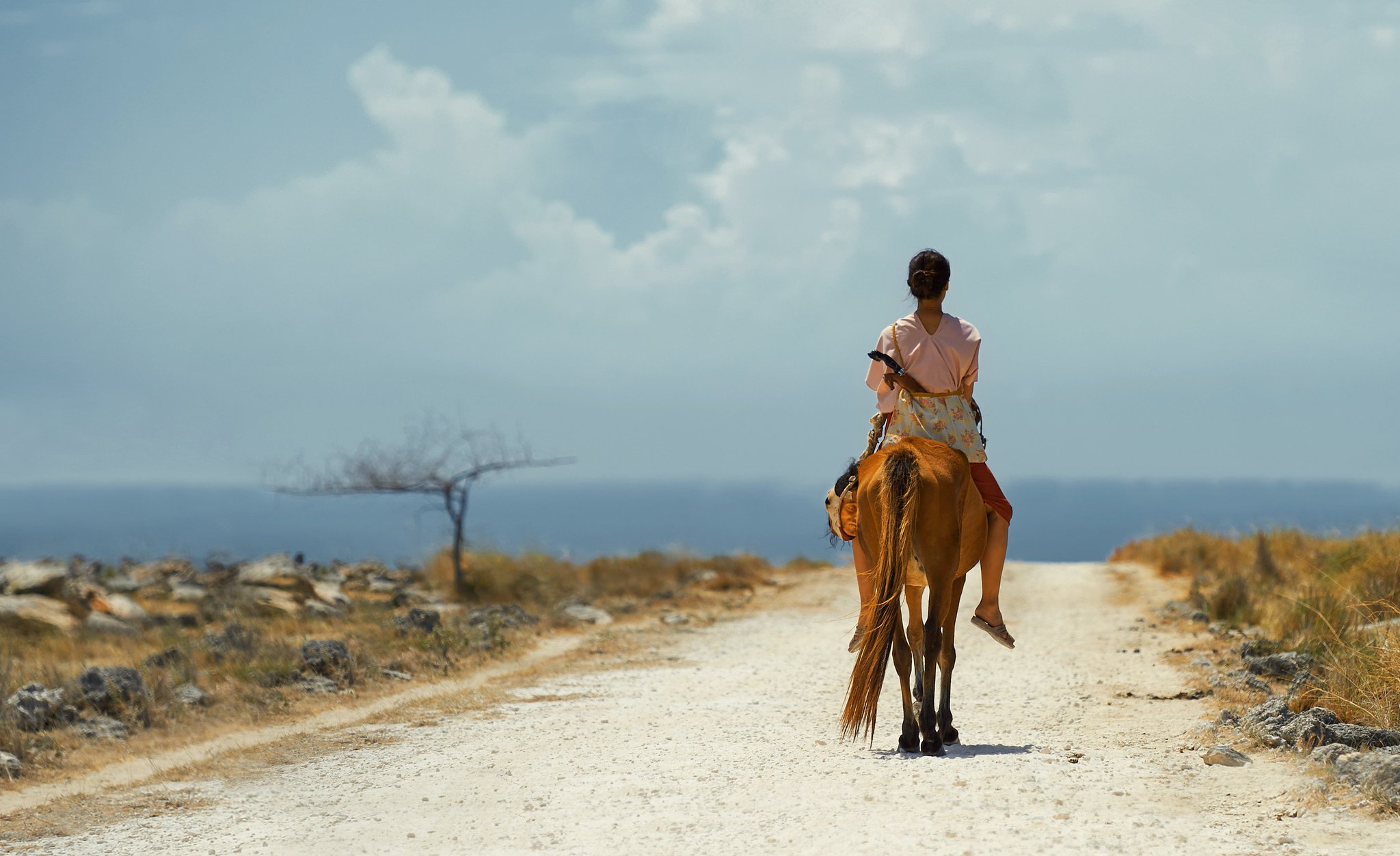
Considered one of the most significant films to emerge from Indonesia in recent years, female director Mouly Surya '"Marlina the Murderer in Four Acts" deals with multiple layers of gender and women issues within the country, through the vehicle of, as critic Maggie Lee puts it, “female-driven journey of vengeance and justice” which tells a story about “… a revenge fantasy rooted in Indonesia’s gender conditions, complex regional culture and the stark beauty of its landscapes” (Variety, 26/5 2017).
Labelled as pioneering a new genre called “Satay Western”, the film was selected and screened at 2017 Cannes Film Festival’s Director Fortnight. It traveled around many film festivals all over the world and got some prestigious awards such as Best actress ( Sitges International Fantastic Film Festival), Best Director (Netpac Award, Five Flavours Film Festival), Grand Prize (Tokyo FILMeX2017), Special Mention (Jogja-NETPAC Asian Film Festival 2017), and Best scenario ( Festival International du Film de Femmes de Salé).
To celebrate both the film's theatrical release in the UK and Kartini Day (21st April is the anniversary of the birth of Raden Ajeng Kartini, one of Indonesian's first feminists), the Watershed has organized a discussion event on contemporary women and gender issues within Indonesian and Southeast Asian national contexts. Hana A Satriyo and Ekky Imanjaya will give the introduction and hold a Q&A session covering a range of women and gender issues, ranging from the patriarchal cultures in general to the roles of women in Indonesian film industry.
Sebagian dari tulisan ini dimuat di majalah Matra edisi September 2004, Tulisan ini dimuat dalam buku A to Z about Indonesian Film"
"Gue mau dong rekaman kayak penyanyi beneran" ungkap Benyamin Sueb kepada Harry Sabar, di tahun 1992. Maka, bersama Harry Sabar, Keenan Nasution, Odink Nasution, dan Aditya, jadilah band Al-Haj dengan album Biang Kerok. Inilah band dan album terakhir Benyamin. "Di lagu itu, entah kenapa, Ben menyanyi seperti berdoa, khusuk.Coba saja dengar Ampunan," jelas Harry, sang music director. "Mungkin sudah tahu kalau hidupnya tinggal sebentar," imbuhnya. Memang betul, setelah album itu keluar, Benyamin sakit keras, dan rencana promosi ditunda-dan tak pernah lagi terwujud kecuali beberapa pentas. Di album ini, Benyamin menyanyi dengan "serius". Tetapi, lagi-lagi, seserius apa pun, tetap saja orang-orang yang terlibat tertawa terpingkal-pingkal saat Benyamin rekaman lagu I’m a Teacher dan Kisah Kucing Tua dengan penuh improvisasi. Sementara lagu Dingin Dingin Dimandiin dan Biang Kerok bernuansa cadas. Dan Ampunanmu kental dengan progressive rock, diantaranya nuansa Watcher of the Sky dari Genesis era Peter Gabriel. Yang menarik, masih menurut Harry, saat Benyamin menonton Earth, Wind, and Fire di Amerika-saat menjenguk anaknya yang kuliah disana-dia langsung komentar:"Nyanyi yang kayak gitu, asyik kali ye?", dan nuansa itu pun hadir di beberapa lagu di album itu, salah satunya dengan sedikit sentuhan Lady Madonna dari The Beatles. Agaknya semua media sudah memuat profil, prstasi, dan kelegendarisan sang Ikon betawi ini.. Lantas, apa yang tersisa. Ape ye yang tersisa dari budayawan betawi yang wafat 5 September 1995 ini? Seniman asli Betawi kelahiran Kemayoran, 5 Maret 1939 ini main film dengan judul yang menjual namanya--sedikit sekali film di Indonesia yang menjual nama bintangnya, tercatat diantaranya Benyamin, Bing Slamet,Ateng, dan Bagyo. Judulnya, antara lain Benyamin Biang Kerok (Nawi Ismail, 1972), Benyamin Brengsek (Nawi Ismail, 1973), Benyamin Jatuh Cinta (Syamsul Fuad, 1976), Benyamin Raja Lenong (Syamsul Fuad, 1975), Benyamin Si Abunawas (Fritz Schadt, 1974), Benyamin Spion 025 (Tjut Jalil, 1974), Traktor Benyamin (Lilik Sudjio, 1975), Jimat Benyamin (Bay Isbahi, 1973), dan Benyamin Tukang Ngibul (Nawi Ismail,1975).Dia juga main di film seperti Ratu Amplop (Nawi Ismail, 1974), Cukong Blo'on (Hardy, Chaidir Djafar, 1973),Tarsan Kota (Lilik Sudjio, 1974),Samson Betawi (Nawi Ismail, 1975), Tiga Janggo (Nawi Ismail, 1976)--,Tarsan Pensiunan (Lilik Sudjio, 1976), Zorro Kemayoran (Lilik Sudjoi, 1976). Sementara Intan Berduri (Turino Djunaidi, 1972) membuat dirinya, dan Rima Melati, meraih Piala Citra 1973, selain karena Si Doel Anak Modern yang digarap Sjuman DJaya. Benyamin juga membuat perusahaan sendiri bernama Jiung Film--diantara produksinya Benyamin Koboi Ngungsi (Nawi Ismail, 1975)--bahkan menyutradarai Musuh Bebuyutan (1974) dan Hippies Lokal (1976). Tetapi, jangan salah, Encing Ben tidak menjadi bintang utama di setiap filmnya. Seperti layaknya semua orang,ada proses dimana Encing Ben "hanya" menjadi figuran atau paling mentok actor pembantu. Dalam hal ini, paling tidak ada dua nama yang patut disebut, yaitu Bing Slamet dan Sjuman Djaya. Walau sudah merintis karir sebagai "bintang film" lewat film perdananya, Banteng Betawi (Nawi Ismail,1971) yang merupakan lanjutan dari Si Pitung (Nawi Ismail, 1970), tetapi kedua nama besar itulah yang mempertajam kemampuan akting Encing BenDalam "berguru" dengan Bing Slamet, Benyamin tidak saja bekerja sama dalam hal musik-seperti dalam lagu Nonton Bioskop dan Brang Breng Brong. Tapi dalam hal film pun dilakoninya. Terlihat dengan jelas, di film Ambisi (Nya Abbas Acup, 1973) -sebuah "komidi musikal" yang diotaki oleh Bing Slamet-Benyamin menjadi teman sang actor utama, Bing Slamet menjadi penyiar Undur-Undur Broadcasting. Di film ini, sudah terlihat gaya "asal goblek" Encing yang penuh improvisasi dan memancing tawa. Di sini, dia berduet dengan Bing Slamet lewat lagu Tukang Sayur. Tetapi, sebenarnya, setahun sebelumnya, Encing Ben juga diajak ikutan main Bing Slamet Setan Djalanan (Hasmanan, 1972). Karena itulah, saat sahabatnya itu wafat pada 17 Desember 1974, Encing Ben tak dapat menahan tangisnya.Dengan Sjuman Djaya, Encing Ben diajak main Si Doel Anak Betawi (Sjuman Djaya, 1973). Dirinya menjadi ayah si Doel, yang diperankan oleh Rano Karno kecil. Perannya serius tapi, seperti stereotipe orang Betawi, kocak dan tetap "asal goblek". Adegan terdasyat film ini adalah saat pertemuan antara abang-adik yang diperankan olehs Benyamin dan Sjuman Djaya sendiri, terlihat ketegangan dan kepiawaian akting keduanya yang mampu mengaduk-aduk emosi penonton. Talenta itu direkam oleh ayah dari Djenar Maesa Ayu dan Aksan Syuman, dan dua tahun kemudian Encing Ben pun main film sekuelnya, Si Doel Anak Modern (Sjuman Djaya, 1975). Kali ini Encing Ben menjadi bintang utamanya, dan meraih Piala Citra!Yang menarik, lebih dari dua puluh tahun kemudian Rano Karno membuat versi sinetronnya. Castingnya nyaris sama: Rano sebagai Si Doel, Benyamin sebagai ayahnya-selain theme songnya dan settingnya yang hanya diubah sedikit saja. Lagi-lagi Encing Ben menjadi actor pendukung, tapi kehadirannya sungguh bermakna.Sebenarnya ada satu lagi film yang dirinya bukan aktor utama, tetapi sangat dominan bahkan namanya dijadikan subjudul atawa tagline: Benyamin vs Drakula. Film itu adalah Drakula Mantu, karya si Raja Komedi Nyak Abbas Akub tahun 1974). Film bergenre komedi horor itu "memaksa" Encing Ben beradu akting dengan Tan Tjeng Bok, si actor tiga zaman.Begitulah, meski beberapa pernah tidak "menjabat" sebagai actor utama, tetapi kehadirannya mencuri perhatian penonton saat itu. Tidak selamanya kegiatan Encing Ben ada di dunia seni budaya. Encing Ben selepas dari SMA Taman Madya Jakarta (1958), melanjutkan ke Akademi Bank Jakarta, tapi tidak tamat. Anak bungsu yang pernah bercita-cita menjadi pilot-tapi dilarang ibunya-itu pernah juga Krusus Lembaga Pembinaan Perusahaan dan Pembinaan Ketatalaksanaan (1960), Latihan Dasar Kemiliteran Kodam V Jaya (1960), Kursus Administrasi Negra (1964). Pernah juga jadi pedagang roti dorong, Kondektur Bus trayek Lapangan Banteng-Pasar Rumput (1959), Bagian Amunisi Peralatan AD (1959-1960), Bagian Musk Kodam V Jaya (1957-1969), dan Kepala Bagian Perusahaan Daerah Kriya Jaya (1960-1969). Tapi, semua itu tidak membuatnya surut untuk menjadi seorang entertainer sejati di Indonesia. Sebab, baginya: "Kepuasan adalah suatu kemunduran". Sepertinya, Indonesia masih saja kehilangan sosok Encing Benyamin yang wafat 5 September, 9 tahu lalu. Indonesia masih saja mencari sosok budayawan yang menghibur sekaligus mendidik bangsa.Jadi, tepat dong kalau, mengutip salah satu kaosnya: "Wanted: Benyamin Sueb, Biang Kerok!"
Sayup-sayup, dari salah satu stasiun swasta, terdengar Encing Ben bernyanyi sendu tapi tetap mengundang tawa di film Tiga Djanggo:
"Djanggo pintar pintar bodo Djanggo tidak suka baso Djanggo suka ngangon kebo Djanggo kalau tidur ngigo" (eimanjaya@yahoo.com)
Saya diwawancara Tempo soal fenomena Warkop Reborn 2 yang menembus angka 2 juta penonton dalam 5 hari saja.
Saya diwawancara panjang lebar, termasuk membahas soal nostalgia dalam konteks film cult (mass cult, cult blockbuster) termasuk soal kutipan (seperti ditekankan oleh Umberto Eco saat membahas Casablanca) dan memakai referensi2 adegan film warkop dan film lain (Seperti Rhoma Irama), tapi sayangnya tidak muncul.
One of my most anticipated Indonesian movies, beside Wiro Sableng: the remake of Pengabdi Setan (Satan's Slave), directed by one of my favorite Indonesian directors, Joko Anwar.
Coming Soon: 28 September 2017.
Wanted: a research assistant for a film related project.
Topic: Exploitation Cinema in the Philippines.
We are doing a research project that compares exploitation cinema of the Philippines (1960s-1980s) with that made in Indonesia (1970s-1990s) under authoritarian government. We are exploring the parallels and connections between the two industries as well as the differences. Researchers are Dr. Thomas Barker (University of Nottingham Malaysia Campus) and Ekky Imanjaya (University of East Anglia/Bina Nusantara University).
A representative list of Filipino titles we are interested in can be found here: http://imdb.filim2.site/list/ls003478019
We need assistance to:
1. Find information in Filipino sources that discuss exploitation production in the Philippines. E.g. how it was framed and discussed in relation to 'mainstream' film production; the presence of American producers/talents; morality and film content; relationship to the Marcos regime; interviews with filmmakers; and other topics.
2. What connections (if any) between Philippines production and Indonesia? Focus on the 1982 Manila Film Festival Market; and other connections e.g. talent, capital, inspiration, genre, themes, etc.
3. Details of any Indonesian films distributed/screened in the Philippines.
4. Details of government support for 'exploitation' films.
Work scope:
Research and collect relevant materials - newspaper articles, archival materials, films.
Provide written summary of key texts, events, and information.
Arrange interviews with relevant figures.
Assist and accompany Researcher to conduct interviews (one week in September/October)
Requirements:
Able to work independently
Attention to detail
Bilingual (Tagalog and English)
Preferable: Prior experience/knowledge of Filipino cinema.
Work period: 3 months (August 15 to Nov 15)
Payment: at prevailing RA rates.
Please send cover letter with CV to Thomas.Barker@nottingham.edu.my and E.Imanjaya@uea.ac.uk by August 10.
(For English version of unedited article, please scroll down).
Notes:
It is always an honor to know that our works are translated into other languages (other than English).
Once, a film magazine in Berlin translated one of my popular writing into Germany back in 2013. And recently, Taipei Film Festival asked me to write an article on "Tiga Dara" (1957) and "Ini Kisah Tiga Dara" (2016), and they translated the article into Chinese. The Chinese version of this article were published in a catalog of Taipei Film Festival (29 June- 15 July 2017). Here's the files the final version of the articles (in Chinese and English).
In 2016, two important Indonesian films were publicly
circulated. They are interconnected and have almost the same titles: Tiga Dara (Three Sisters, Usmar Ismail, 1956) was re-released in August and Ini Kisah Tiga Dara (Three Sassy Sisters, Nia Dinata, 2016)
was circulated a month later in the same year. Both films have their own
cultural importance in their own time and have similar spirit of challenging
the society with the issues of women’s social status in Indonesian society,
particularly the marriage culture and issues of finding husbands.
It is worth to note that, in particular
cultures in Indonesia, women should marry in certain age. If she is still
single, after “the deadline”, let’s say after 30, she will get social pressure to
get married as soon as possible, and get bad stereotype of just being single.
Surely, as time goes by, the perspective has changed as social values also
constantly change. By watching both
films, audience can compare and contrast how society has developed and the differences between generations farther
away, namely between the conservative/old-fashioned one and liberal/permissive one.
Below, I will elaborate why both films are
important as social archive in Indonesian context. And probably non-Indonesia
audience can reflect and produce their own meaning towards the films with their
own culture values and perspectives.
Tiga Dara: Cultural Importance
Tiga Dara was recently fully restored and publicly
screened in the cinema in Indonesia.
Although It is not the first film that got full restoration--the first
one would be Usmar Ismail’s Lewat Djam
Malam(After Curfew, 1954), which was also screened at 2012 Cannes
Classic--but Tiga Dara is the first Indonesian film which got 4K
restoration. In fact, it is the first
Asian film to be restored in 4K format—the second one would be Akira Kurosawa’sSeven Samurai.
Similar with After Curfew, Tiga Dara was restored by L'Immagine
Ritrovata, Bologna, Italy. It took around $220,000 to restore the film,
sponsored by SA Films from Indonesia. Two
Indonesian citizens, Lintang Gitomartoyo and Lisabona
Rahman, were involved in this process. The Lab was chosen because it is the only
studio to be able to deal with a tropical mold normally found in celluloid from
tropical lands, such as vinegar syndrome.
It took 8 months to do the process.
After the restoration, PT Render Digital
Indonesia converted the 35mm into 4K digital. The film has 150 thousands frames
and each frame took 2 hours to be converted into 4K digital format in 53 Gigabyte.
In total, there are 12 Terabyte files and the process took another 6 months to
do the digital conversion.
Actually, in 2011, the film was in process of
restoration by EYE Museum Amsterdam, almost the
same time with After Curfew, but
being abandoned due to the economy crisis of the country, until SA Films took
over the process.
The film was theatrically and domestically released
in August 2016 and got around 30 thousands spectators in 8 weeks. Soon, the
movie will be released in DVD and Blu-ray.
Tiga Dara was chosen to be fully restored in 4K because
it is considered as one of important cultural heritage in film format, both as
text and context.
First of all, Tiga Dara, in very popular and entertaining way, questions the patriarchal
culture which was dominated the 1950s era. The director Usmar Ismail, known as
the Father of Indonesian Cinema, critically raises some issues regarding women
rights and social status and marriage. In the movie, there are some topics regarding the bad
stereotype towards unmarried young women as well as their roles in domestic
sectors. It is important to note that
the film was originally produced, distributed, and exhibited nationwide only 12
years after Indonesia’s independence, when the numbers of illiterate citizens dominated
the nation. Later, the idea of feminism
and progressive women would occur in few of Usmar Ismail’s later films,
particularly in Ananda (1970), his
last movie.
These kinds of issue are still relevant even
in a millennial era, and still echo in some recent Indonesian films, including Ini Kisah Tiga Dara (see below).
Of course, Ismail also put great songs, involving
best composers and singers and that led to the timeless and jazzy ear-catchy
songs. Big names such as Sjaiful Bachrie, Ismail Marzuki, Sam Saimun, and Bing
Slamet were part of the soundtrack and music scoring team. In 1957 Indonesian
Film Festival, the film got Citra Awards-Indonesia’s equivalent of Oscar—for
the Best Music.
Related to historical importance, Tiga Dara was the trendsetter in the
1950s. It was a box office film, premiered
at Capitol Theater and screened in prestigious movie-theatres associated as the
outlet of A-class Hollywood and other imported movies for 8 weeks in a row. At
that time, it was very rare for an Indonesian movie to be screened in the A-class
movie-theatres. In addition, President Soekarno, an American cinema fan, asked the producer to screen the film at the Presidential
Palace for a private birthday party of Hartini, his beloved wife. In society,
the film was one of the most discussed films of the 1950s. The
social and cultural impact of the film in the era is inevitable. There was a Tiga Dara contest which attracted many
young girls and boys. Afterwards, there were some products using Tiga Dara as their brands, from soft-drinks
to batik clothing companies.
In addition, the film got imported to
Malaysia, Italy (including 1959 Venice Film Festival), Yugoslavia, New Guinea,
and Suriname.
We
can also consider the film as a “time machine”. Therefore, we can have access to
and understand the zeitgeist of Jakarta and Bandung in mid 1950s, and even we
can watch the development of the capital city (particularly the Cilincing picnic
scene) and social life and social problems in the era.
The Legacy
of Tiga Dara
The resonance of Tiga Dara is strong, even in today’s film scenes. There are at
least two films in the 1980s which were influenced by the film, namely Tiga Dara Mencari
Cinta (Three Girls Finding Love, Djun
Saptohadi 1980) and Pacar Ketinggalan Kereta (Prickly Heat, Teguh Karya, 1989),
For a more recent case, we have Three Sassy Sisters. A month after the
re-released of Tiga Dara, Ini Kisah Tiga Dara was theatrically
released in September 2016. The female
director Nia Dinata remembers that she watched Tiga Dara on TVRI (the only TV station at that time) as one of the
first Indonesian musical films she watched. As a director and producer who
constantly make films about women rights and equality (such as Berbagi Suami/Love For Share in 2006 and
Perempuan Punya Cerita/Chants of Lotus in
2007), she was interested in making similar
film. However, Nia Dinata explains that Ini
Kisah Tiga Dara is not a remake of Tiga
Dara, but it is “inspired by” the classical film.
The film has many similarities to the classic
one. The basic plot and story is similar, about three sisters being raised by a
grandmother and a single father and face the problems of marriage culture and
women’s rights, as well as sibling rivalries towards a man. The focus of main storyline is also about the
grandma who does many things to patiently “force” her oldest grand-daughter to
marry as soon as possible, and problems develop from that situation. It is also musical, and includes Tiga Dara theme song. In fact, the Indonesian
title is a line of the lyrics of Tiga
Dara theme song.
However, of course there are some differences.
Dinata, with Lucky Kuswandi, wrote the script in 2016,
thus with different context and social problems, and more modern and
contemporary approaches. Unlike the classic film, in this movie the three
sisters got definite jobs (a chef, a PR and marketing staff, and a voluntary
teacher for children, respectively) in their dad’s boutique hotel at the seaside of Maumere.
The tension between generations gets stronger, particularly between the
grandma (as the representation of conservative/traditional perspective) and the
youngest one (the most liberal and aggressive one). Discourses of feminism, patriarchism, matriarchism,
inevitable became more visible than the classic one.
Since the problems and era are different,
Dinata put new songs in the movie as the means to communicate and express her
voices. And, the whole spirit of the story was resumed in a song titled Matriarch. The new songs and arrangement were done by
music directors, Aghi
Narottama and Bemby Gusti
and, unlike the classic film, sung by the original cast.
The strong aggressiveness of the main young characters (particularly
the youngest one) has led the Indonesian censorship board to classify the film
as adult movies (only for 21 years old and above). Discourses of women empowerment more prominently
occurs in this film.
The other different elements are the location
and color format. The classic film is in black and white and located in Jakarta
and Bandung. The modern version has
benefit to explore colorful culture and landscape of Maumere and Flores Island
to support the director’s statements. So, the film invites us to take a journey
to exotic places such as Geliting traditional market, a 118 years Old
Portuguese church in Sikka village, Koka Beach, and Magepanda Mangrove Forest.
The film was screened in some film festivals,
including Singapore, Tokyo, and Busan.
Conclusion
Tiga Dara was chosen carefully to be restored with a
long and costly process exactly because it has a significant cultural importance
back in the 1950s and its messages still resonate beyond millennial era. The
film was a trendsetter in the 1950s popular lifestyle and its discourses (gender issues, patriarchal
culture, etc) seem to be timeless and are still relevant until recently.
And the legacy of challenging the society
continues. Nia Dinata--a well-known feminist filmmaker who consistently produces films on gender and
women’s rights--capture, interpret and translate the classical film in the
context of 2016 and directed Three Sassy
Girls.
Both films share similar ideas and
spirit. Both films are significant for both Indonesia’s context and other nations and
cultures which have similar problems and concerns.